
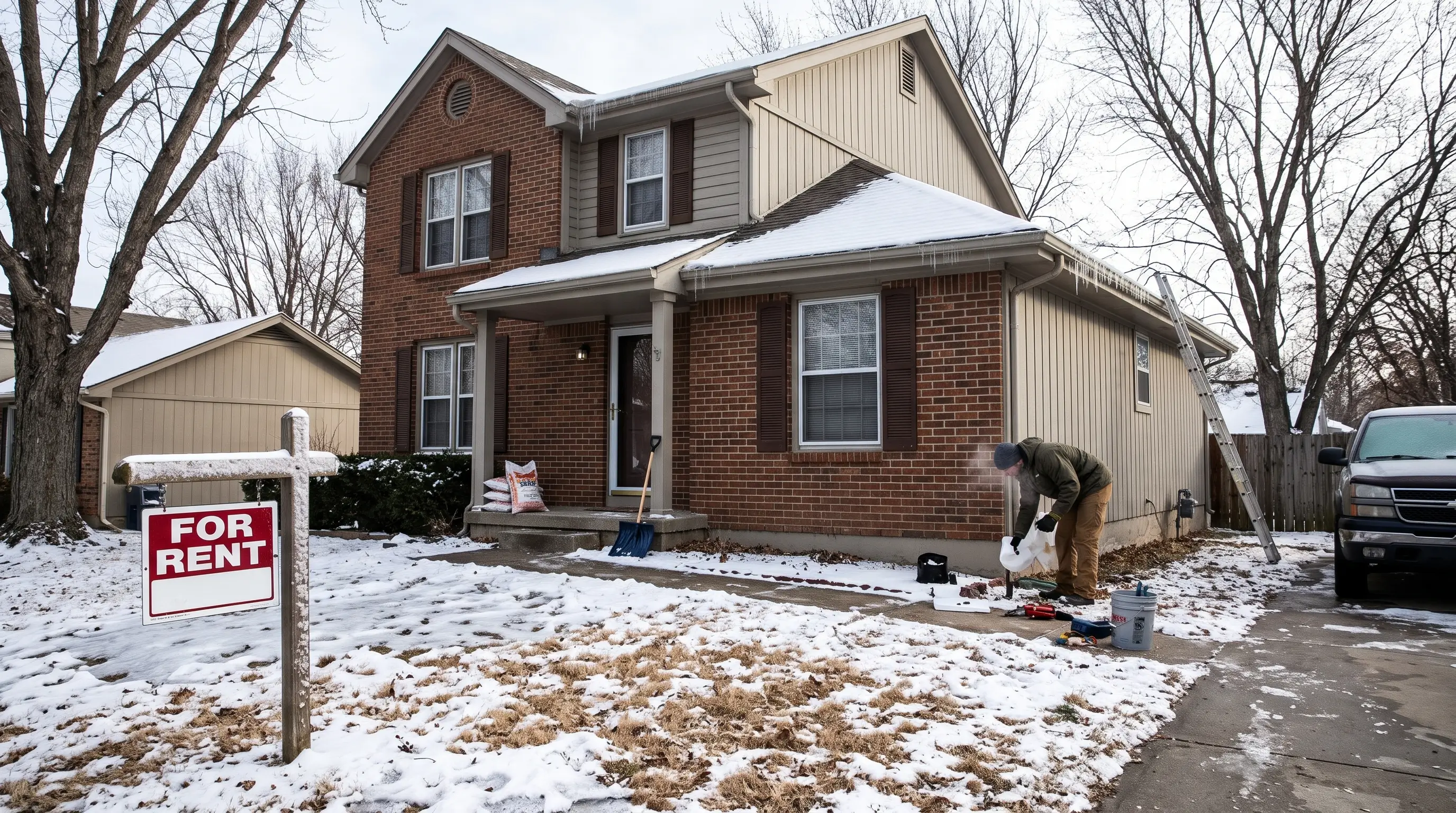
One overnight freeze can undo a full year of rental income.
It starts quietly. A pipe along an exterior wall chills a little too long while everyone sleeps. By morning, water is seeping through the ceiling, and your tenant is calling in a panic.
Kansas City winters have a way of catching owners off guard. A mild week lulls you into thinking the worst has passed. Then a hard freeze rolls in overnight and finds every weak spot your rental has.
For rental owners, a burst pipe means more than a repair bill. It can also mean an unhappy tenant and lost rent while the unit dries out. Most of that damage never has to happen. The owners who sail through winter usually aren't luckier. They just know where to look before the cold arrives.
In this article, we'll walk through the steps that keep your rental safe and your tenants comfortable all winter.
Key Takeaways
- Kansas City temperatures hover near freezing all winter, so plumbing protection comes first.
- A furnace tune-up and fresh filters prevent costly midwinter breakdowns.
- Clear gutters and trimmed trees reduce ice dam and storm damage.
- Written tenant expectations cut down on preventable freeze damage.
Why Kansas City Winters Hit Rentals Hard
Kansas City weather rarely settles into one pattern, and that unpredictability is exactly what makes it tough on rentals.
Winters here hover right around the freezing mark, with the city's average winter temperature sitting at 31.9 degrees under the newest 30-year normals. A mild afternoon can give way to a hard freeze overnight. That constant back-and-forth puts steady stress on pipes and foundations.
Snow adds to the challenge, though the city's average of about 18.2 inches a year sounds modest on paper. Freezing rain and sleet are the real troublemakers, adding weight to roofs and turning walkways into skating rinks.
How to Prepare Your Kansas City Rental for Winter
A little prep in the fall saves owners from expensive emergency calls. Here are the steps to finish before the first hard freeze.
Protect the Plumbing
Plumbing deserves your attention first. Pipes along exterior walls or in unheated spaces freeze fastest. Before temperatures dip, work through this list:
- Insulate exposed pipes. Foam sleeves are cheap and quick to install in crawl spaces and unheated garages.
- Disconnect outdoor hoses. A hose left attached traps water inside the spigot. Shut off the exterior valve and drain the line.
- Label the main shutoff valve. State Farm advises knowing where your shutoff valve is before an emergency happens. Show your tenants too, since fast action limits damage.
- Seal drafty gaps. Caulk around pipe openings and vents to keep frigid air off the lines.
Service the Furnace
A furnace that quits in January turns into an emergency fast. HVAC techs also book up quickly once a cold snap hits. Schedule maintenance early and cover these basics:
- Book a professional tune-up. A technician can spot worn parts before they fail.
- Replace air filters. Clogged filters force the system to work harder and wear out sooner.
- Test CO and smoke detectors. Gas furnaces run nonstop in winter, so working carbon monoxide detectors are a must.
- Check the thermostat. Fresh batteries and accurate readings keep the heat running as expected.
VP Property Management takes winter maintenance off your plate. Contact our maintenance team to get your rental ready before the first hard freeze.
Clean the Gutters
Leaf-packed gutters trap melting snow. When that water refreezes, it forms ice dams along the roof edge. Those dams push water under shingles and into ceilings. Clean gutters after the last leaves fall.
While you're up there, look at nearby trees. Ice adds serious weight to branches. A limb hanging over the roof can snap and cause damage that takes weeks to repair.
Set Tenant Expectations
Tenants are your first line of defense when temperatures drop. Put your expectations in writing, both in the lease and in a winter reminder.
- Share a winter checklist. Ask tenants to open sink cabinets and let faucets drip on bitter nights.
- Clarify snow removal duties. Spell out who clears the driveway and sidewalks.
- Set a minimum thermostat rule. Require heat to stay on at a set temperature, even when tenants travel.
- Explain emergency reporting. Tenants should know exactly how to reach you after hours.
Strong tenant screening pays off here too. Responsible renters report small problems before they become big ones.
Keep Vacant Units Heated
Empty rentals freeze quietly. Nobody hears the drip or feels the cold. Keep the heat on at a low but safe setting between tenants. Schedule regular walkthroughs during cold stretches so problems get caught early.
Shorter vacancies mean less winter risk overall. Use the vacancy calculator to see what an empty month really costs you.
Frequently Asked Questions
- Often, when the damage is sudden and accidental. Policies may exclude it if the owner failed to maintain heat, so review your coverage before winter.
- It depends on your lease and the cause. Many leases hold tenants responsible for damage from negligence, such as turning off the heat.
- Renters insurance protects tenants' belongings, which landlord policies typically don't cover. Many owners require it year-round.
Beat the Next Cold Snap
Winter in Kansas City will test your rental one way or another. The real question is whether you'll be ready when it does.
Owners who prepare early spend the season handling routine tasks instead of emergencies. They aren't scrambling for a plumber at midnight or calming a frustrated tenant over a cold furnace. A few fall checks protect your property and keep tenants happy enough to renew.
Keep Your Kansas City Rental Winter-Ready
Let's talk about keeping your rental protected all winter. Call VP Property Management at (816) 378-0007 or reach out to our team today.
Reach Out to Our Team